
Leather Welding Aprons: Safety Gear Every Welder Needs
Different welding processes throw off different kinds of hazard, and the apron that works fine for one type of welding can leave you underprotected for another. A hobbyist doing occasional TIG work on thin aluminum faces a very different spatter and heat profile than a fabricator running stick welds on structural steel all day. This article focuses on matching a leather welding apron to the actual process you're running, along with the safety fundamentals that apply across all of them.

Matching Apron Protection to Welding Process
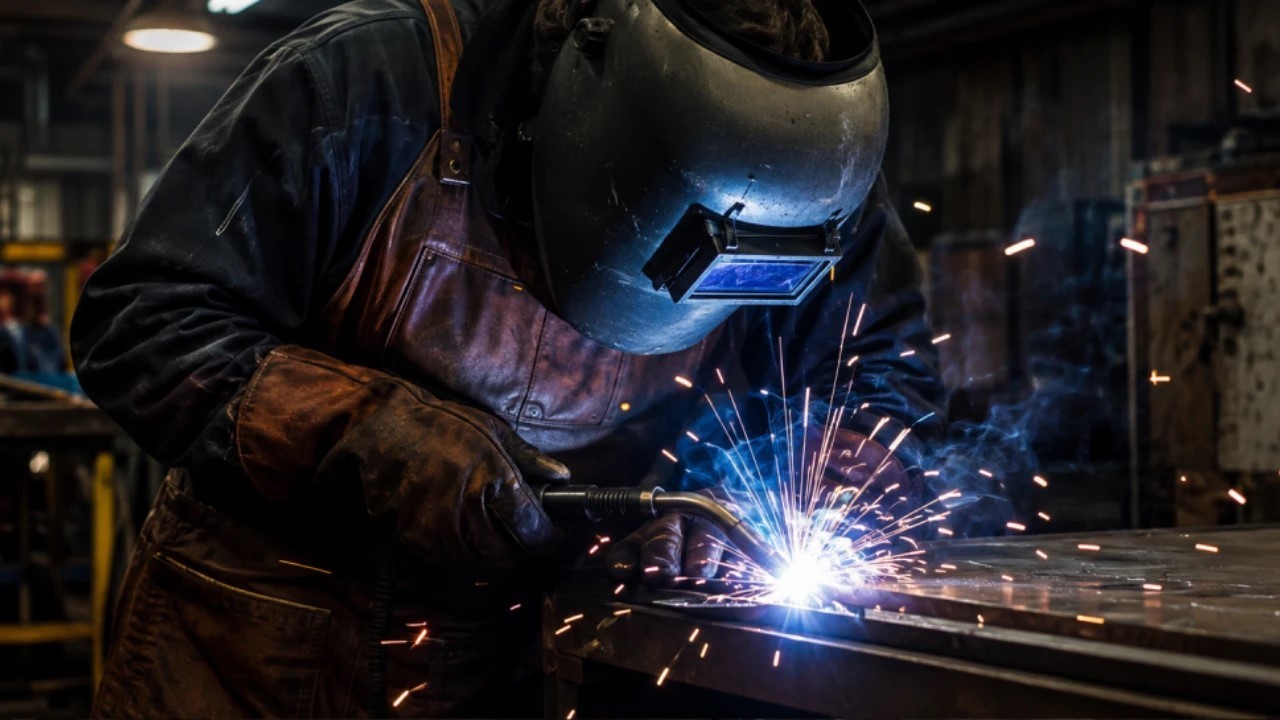
MIG welding produces frequent, relatively fine spatter that can travel a surprising distance and accumulate steadily over a shift. A full bib-to-shin leather apron with a smooth, spatter-shedding surface handles this well, since spatter that lands on leather cools and flakes off rather than sticking.
Stick welding (SMAW) tends to throw heavier, larger spatter and generates more radiant heat at close range, especially on thicker material. This is where thickness matters most, leather at the higher end of the standard range (closer to 4mm) gives meaningfully better protection than a thinner hide during extended stick welding sessions.
TIG welding generally produces less spatter than MIG or stick, but the process often runs closer to the workpiece and for longer continuous stretches, which means sustained radiant heat exposure is the bigger concern. A well-fitted apron that doesn't restrict the close, careful arm movement TIG demands matters as much as raw thickness here.
Plasma cutting and grinding, often done in the same session as welding, throw sparks in a wider, less predictable pattern. Full coverage, including the forearms if you're using separate sleeves, becomes more important when cutting and grinding are part of the regular workflow.
Bib Apron vs. Full-Body Coverage
A bib-style leather welding apron, covering from chest to roughly mid-shin, is the standard choice for most welding work and offers a practical balance of protection and mobility. Full coverage suits with integrated sleeves exist for higher-exposure environments but trade some freedom of movement for additional arm protection. For most shop and fabrication work, a well-made bib apron paired with separate leather sleeves, if needed, offers more flexibility than a single rigid full-body suit.
Leather Grade and What It Means for Safety
Not all "leather welding apron" listings use the same grade of material, and the difference matters more here than in most other trades:
Full-grain cowhide is the standard for serious welding aprons, dense, durable, and slow to burn through even under repeated spatter contact.
Split leather (suede-finish) is lighter and less expensive but wears through faster and offers somewhat less consistent protection, since the fiber structure is less dense than full-grain.
Chrome-tanned leather tends to be softer and more flexible for long sessions, while oil-tanned or vegetable-tanned leather is often stiffer initially but considered slightly more heat-resistant by some welders in its raw state.
For daily professional use, full-grain, chrome or oil-tanned cowhide in the 3-4mm range is the widely recommended standard.
Hardware and Fastening Details
Metal snaps and buckles should be positioned so they won't sit directly in the spatter zone if possible, since repeated hot metal contact can eventually degrade even brass hardware faster than the surrounding leather. Quick-release fastening is a genuine safety feature, not just convenience, being able to shed the apron quickly matters if spatter or a spark ever lands somewhere unexpected. Avoid aprons with exposed plastic components near the torso entirely; plastic near a welding arc is simply the wrong material regardless of how it's marketed.
Layering With Other PPE
A leather welding apron works alongside, not instead of, other protective equipment, welding helmet, gloves, and sleeves or a jacket for full-arm coverage. The apron's job is specifically torso and thigh protection from spatter, radiant heat, and sharp edges from handled stock; it isn't a substitute for eye and face protection or respiratory precautions in poorly ventilated spaces.












Facebook Conversations