
What Should Female Ministers Wear When Participating in a Church Processional?
This article explains how female ministers can choose traditional yet practical attire for church processionals. It covers appropriate vestments, seasonal stole colors, underlayers, comfortable footwear, and essential styling tips to ensure safe movement, a polished appearance, and a reverent presence during worship services.

On Easter morning, as the choir sings the first verse, Pastor Joy lifts a lit taper and steps into the aisle behind the cross. Halfway to the chancel, she feels the hem of her borrowed robe catch under her heel, and a warm drop of wax lands on her wide sleeve. She keeps her eyes forward, slows her steps, tilts the candle a little away from the cloth and reaches the front without a stumble. Afterward, in the vestry, she turns the sleeve over, scrapes off the wax with her thumbnail and writes a note on her hand: shorter hem, closer cuffs, soft shoes.
A processional is one of the few moments in worship when everyone looks at the ministers at the same time. The group moves slowly, in order and often in silence, sometimes carrying a cross, a candle or a Bible, up steps and through a crowded nave. The clothing has to look right and also behave well, because a trailing hem or a flowing sleeve can turn a reverent walk into a risky one. Most advice online lists vestments, and few pieces consider how the garments move in a line.
With that in mind, female minister attire for a church processional usually combines the vestments of your tradition with a color-matched stole and practical choices about hem, sleeve and shoes. The sections below start with a quick answer, then cover vestments by tradition, stoles and colors, under-layers, hems and sleeves, footwear, lessons from older traditions, a short pre-service checklist, and where to order.
Can Female Minister Attire Be Both Traditional and Practical in a Processional?
Quick answer: Yes. In liturgical churches, wear a white alb or a black cassock with a white surplice and a stole in the color of the season. In less liturgical churches, a tailored black clergy dress or dark suit with a clerical collar is standard, with a pulpit robe where it is customary. Check the hem, keep sleeves fitted near candles, and wear quiet, stable shoes.
Clerical Wear for Women: Which Vestments Suit Which Tradition?
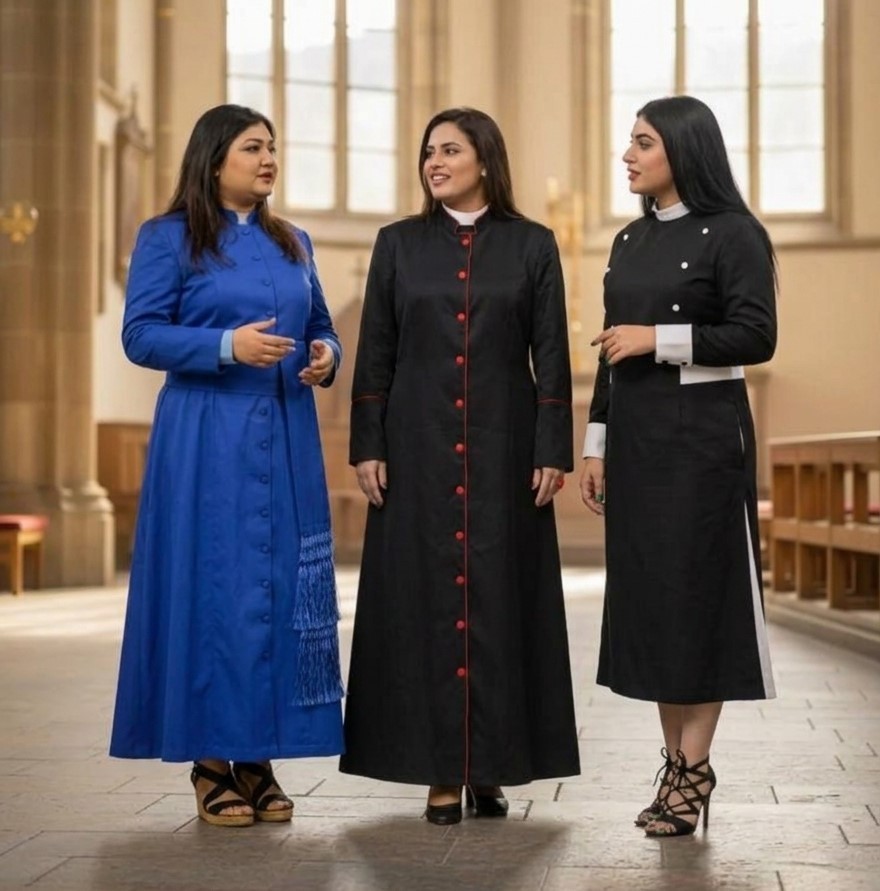
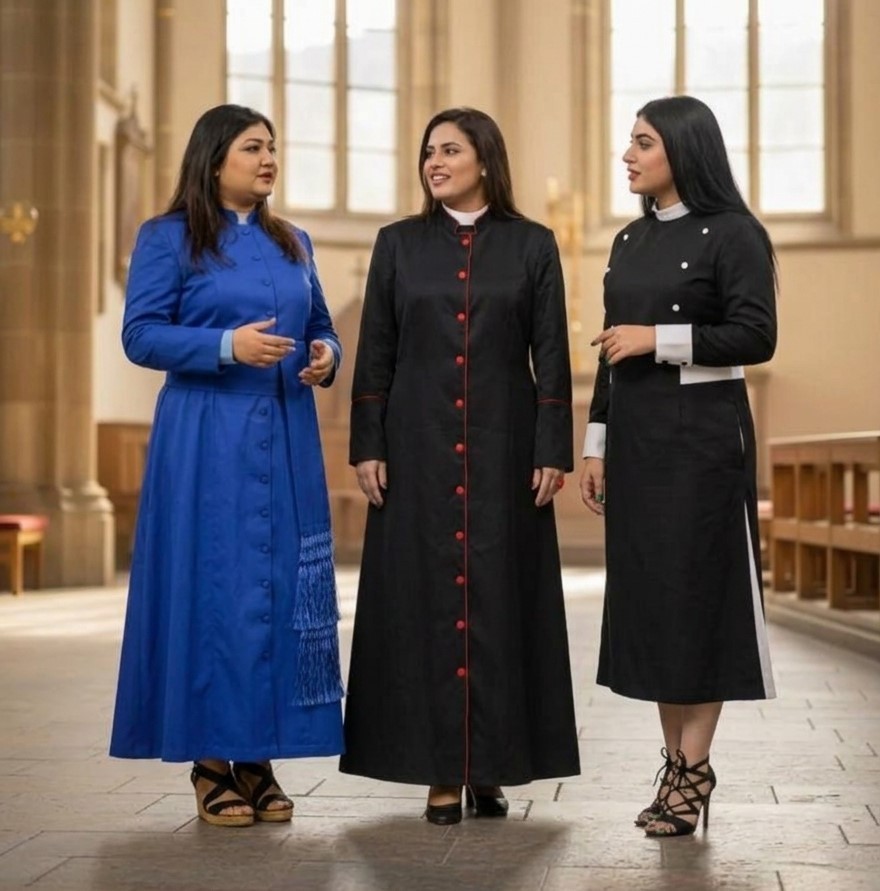
Traditions set different expectations, and the first task is to learn yours. Clerical wear for women in liturgical denominations such as the Episcopal, Lutheran, Methodist, and Presbyterian churches commonly means a full-length white alb cinched with a cincture, or a black cassock with a white surplice. In preaching and Reformed traditions, a flowing black Geneva gown, also called a pulpit robe, is worn over dark business attire or a clerical shirt. In non-denominational and contemporary churches where robes are not customary, a modest tailored black or navy suit, or a knee-to-midi clergy dress with a tab or neckband collar, is a fitting choice. Practice varies within each tradition, so ask your pastor or bishop's office, and note what the other ministers will wear.
Women's Clerical Wear: How Do the Stole and Seasonal Colors Fit In?
The stole is the visible signal of ordained ministry in many processions. Women's clerical wear in liturgical traditions usually includes a stole draped around the neck over the alb or robe, in the color of the church season: purple for Advent and Lent, white or gold for Christmas and Easter, green for Ordinary Time and red for Pentecost. Check how your church wears it, since some traditions cross it, some let it hang straight, and others reserve it for certain roles. Make sure it sits evenly and does not slide when you walk. A safety pin hidden at the shoulder can help. If you are unsure of the day's color, ask the rector or worship leader a few days before, and keep a neutral stole in reserve for last-minute changes.
Female Clergy Clothing: What Should You Wear Under an Open Robe?
What you wear underneath matters because an open front or a loose alb reveals the collar area. Female clergy clothing beneath a robe is usually a dark clerical collar shirt or a high-neckline blouse, so the collar stays neat and the neckline does not gape as you walk. Choose a thin, smooth fabric that does not bunch under the alb, and a fitted cut that follows a woman's frame, so sleeves do not roll up inside the robe. In a warm church, pick breathable cotton or a light blend, because a robe adds a layer and a long procession can be hot. Wear trousers or a skirt that is plain and dark, since the hem of the robe may show at the ankle. Try the whole combination at home and walk in it.
Women Clergy Attire: How Do You Handle Hems, Sleeves and Candles?
A processional is slow, but it is also close to open flames, stairs and other people. Women clergy attire for this moment should follow a few simple rules:
Check the hemline: the robe or cassock should clear the floor by an inch or two, so you can keep a steady pace and climb steps without tripping
Mind the sleeves: if you or those beside you carry lit candles or incense, avoid wide, flowing bell sleeves, or make sure the cuffs are neatly fitted
Keep the stole tucked or pinned so it does not swing near a flame
Check fabrics: heavily synthetic robes can melt, so ask about flame safety if candles are used
Practice with the actual items, such as a cross, book or candle, before the service
If a borrowed robe does not fit, ask for a different size or have the hem taken up before the day. A few minutes with a needle can prevent a fall.
Which Shoes Keep You Quiet and Steady?
Footwear is easy to forget and hard to forget once it goes wrong. Choose closed-toe, low-heeled flats or sturdy dress shoes with non-slip soles, so you avoid loud clicking on sanctuary floors and do not lose balance on chancel steps. Break the shoes in before the service, since a processional can run longer than expected, and a stiff new pair can hurt by the end of a long Easter or ordination service. Dark colors hide scuffs and sit quietly below a robe hem. In winter, wear thin, smooth socks or tights that will not catch, and keep spare insoles in the vestry bag if your church has hard stone floors. If your church processes outdoors, add a pair of overshoes for wet grass or gravel.
What Can Catholic Processions Teach About Order and Unity?
The catholic Church ordains only men, so women cannot copy it, but its processions offer useful lessons. Catholic priest attire follows a clear order, with an alb, a stole and an outer vestment in the color of the day, and everyone in the line wears the same level of dress. The effect is calm and unified, which is the point of a procession. Women priests and ministers in Anglican, Episcopal, Lutheran, Methodist and other traditions follow a similar pattern with their own garments. The takeaway is that a processional works best when clothing is consistent, tidy, and quiet, so people watch the cross, not the ministers. You can borrow the principle without borrowing garments from another rite.
Where Should You Order Before the Next Processional?
Order early, because tailoring and delivery take time and processionals fall on fixed dates. eClergys offers women's clergy shirts, dresses, suits and cassocks in female-specific cuts, with colors including black, white, pink, red, blue, green and gray, and sizes commonly running from 8 through 30. Before you buy, compare the collar style, fabric, hem length, sleeve cut, return policy and delivery time, and ask about robes and stoles if your tradition expects them. Start with a clerical shirt and a dark dress or suit, then add the vestments you need. Try everything on at home and walk a few steps in it before the service.
Final Thoughts
Female minister attire for a church processional works best when it follows your tradition's vestments, matches the stole to the season and moves well. Choose a neat clerical shirt or high neckline under open robes, check the hem, keep sleeves fitted near candles and wear quiet, stable shoes. The orderly example of Catholic priest attire shows how unity and calm help a procession feel reverent. Ask your pastor what is expected, practice with the real items, keep spare pins and a lint roller in your vestry bag and order early. When your clothes behave, the line can move as one.
Frequently Asked Questions
What does a female minister wear?
She wears the garments of her tradition, such as an alb or cassock with a surplice and stole, or a tailored dress or suit with a clerical collar.
How should a minister dress?
Neatly and modestly, matching the formality of the church and the occasion, and following the denomination's guidance.
What is a minister's outfit called?
It is called clerical dress or clerical attire, and the worship garments are called vestments, such as the alb, cassock, surplice and stole.
What is a good church outfit for a woman?
A modest dress, or a skirt or trousers with a blouse and jacket, in neat, comfortable fabric that suits the congregation's level of formality.
What shoes should a female minister wear in a processional?
Closed-toe, low-heeled flats or sturdy dress shoes with non-slip soles that are quiet on the floor and steady on steps.














Facebook Conversations