
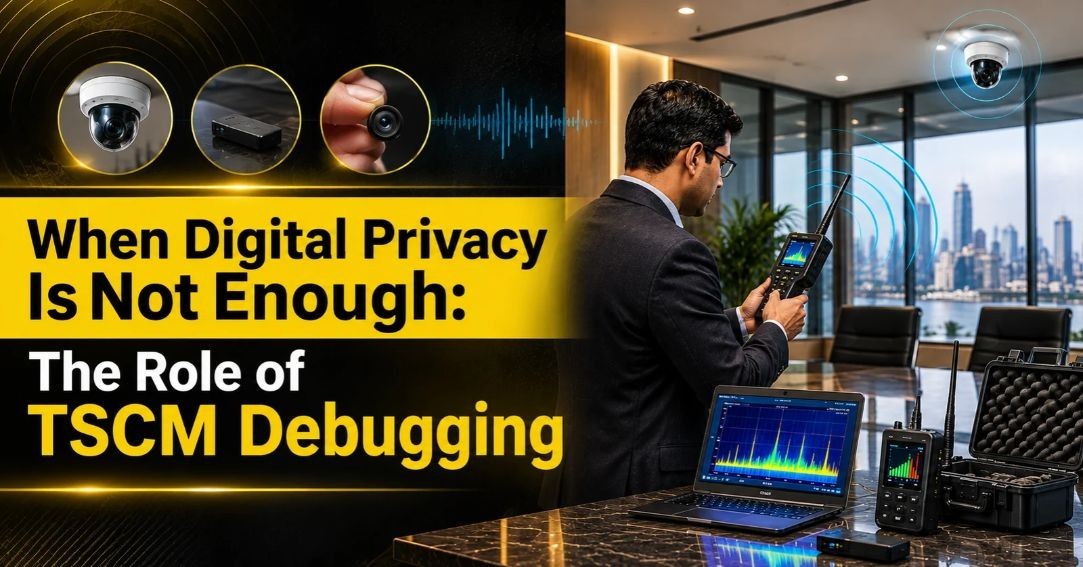
When Digital Privacy Is Not Enough: The Role of TSCM Debugging
Discover why cybersecurity alone may not protect physical privacy and how TSCM debugging helps identify potential hidden cameras, listening devices, and electronic surveillance threats.

Cybersecurity and TSCM inspections address different types of potential threats.
Cybersecurity focuses on protecting digital systems, networks, devices, and information from unauthorized access, malware, data breaches, and other online risks. It involves measures such as encryption, access controls, endpoint protection, network monitoring, and secure authentication.
TSCM debugging, on the other hand, focuses on identifying potential electronic surveillance devices and unauthorized monitoring equipment within physical environments. Professional inspections may involve examining radio frequency activity, checking suspicious electronic components, and using specialized detection equipment.
While cybersecurity protects digital information, TSCM inspections assess potential surveillance risks associated with physical spaces.
Both serve an important purpose, but neither should be considered a replacement for the other.
Why Digital Security Alone May Not Be Enough
Imagine a company that uses encrypted communication platforms, regularly updates its software, and follows strict access-control policies. Its digital infrastructure may be well protected.
However, what happens if an important strategy meeting takes place in a room containing an unauthorized audio recording device?
This example highlights a different dimension of privacy. Information does not always travel through computers, mobile applications, or online networks. Sometimes, sensitive information is exchanged through ordinary face-to-face conversations.
Potential surveillance concerns may arise in several environments:
- Corporate boardrooms: Confidential discussions involving business strategies, acquisitions, or financial decisions.
- Executive offices: Private conversations involving leadership decisions and sensitive company information.
- Conference rooms: Meetings involving clients, business partners, or confidential negotiations.
- Private residences: Personal spaces where individuals may have concerns about unauthorized monitoring.
- Hotels and temporary workspaces: Locations where people may discuss sensitive matters away from their regular offices.
These situations demonstrate why physical privacy deserves attention alongside digital protection.
What Does a Professional TSCM Inspection Involve?
TSCM debugging is a technical inspection process designed to identify potential electronic surveillance threats. It requires suitable equipment, technical understanding, and a systematic approach.
Depending on the environment and inspection requirements, professional assessments may involve:
1. Radio Frequency Analysis
RF spectrum analyzers can help examine radio frequency activity and identify signals that may require further investigation. Not every detected signal indicates surveillance, so technical interpretation is essential.
2. Non-Linear Junction Detection
Non-Linear Junction Detectors (NLJDs) can help identify electronic components, including certain devices that may not be actively transmitting signals.
3. Physical and Visual Inspection
A systematic examination of the premises can help identify unusual objects, suspicious modifications, unfamiliar electronic equipment, or components that warrant closer assessment.
4. Examination of Sensitive Areas
Meeting rooms, executive offices, private cabins, and other sensitive locations may receive particular attention depending on the client's concerns and inspection scope.
The objective is not simply to detect electronic activity but to assess potential threats through appropriate technical methods and professional evaluation.
Cybersecurity and TSCM: Why Both Matter
A well-planned privacy strategy should consider both digital and physical environments.
For example, a corporate organization may implement encrypted communication, restricted network access, employee awareness programs, and regular cybersecurity assessments. These measures help reduce digital exposure.
However, sensitive meeting spaces may require a separate physical security assessment to identify potential electronic surveillance concerns.
Consider the following distinction:
Privacy requirement: relevant approach
Protecting company networks: cybersecurity
Preventing unauthorized digital access Access controls and encryption
Identifying suspicious wireless transmissions by RF analysis
Examining potential concealed electronic components: TSCM inspection
Protecting confidential physical meetings Appropriate workplace privacy measures and TSCM assessments
Combining these approaches creates a broader understanding of privacy risks without assuming that one inspection or technology can address every possible threat.
When Should Businesses Consider TSCM Debugging?
Not every office requires inspections at the same frequency. The decision should depend on the sensitivity of business operations, the nature of confidential discussions, and changes within the workplace.
Certain circumstances may justify considering a professional assessment:
- Before or after important confidential negotiations.
- Following office relocation or significant renovation.
- When executive or meeting spaces undergo changes in access.
- When unexplained privacy concerns arise.
- As part of a broader corporate risk-management program.
- When handling highly sensitive business or strategic information.
Periodic assessments can also help organisations maintainawareness of their physical privacy requirements rather than waiting until aconcern becomes more serious.
Choosing the Right TSCM Inspection Provider
Professional expertise matters when evaluating potential surveillance threats. An inspection should involve more than a quick visual examination or reliance on a single detection instrument.
When considering a TSCM service provider, businesses and individuals should look at:
- Experience in technical surveillance detection.
- Availability of appropriate inspection equipment.
- Knowledge of RF analysis and electronic detection techniques.
- A systematic approach to inspecting different environments.
- Clear communication about inspection scope and findings.
- Professional discretion and responsible handling of client information.
It is equally important to understand that no inspection can guarantee the identification of every possible surveillance threat. Results depend on the environment, equipment, inspection conditions, and scope of work.
A More Complete Approach to Modern Privacy
Digital privacy and physical privacy are closely connected, but they require different methods of assessment. Strong cybersecurity practices can help protect sensitive information stored, transmitted, and accessed electronically. Expert debugging addresses another important consideration: the possibility of unauthorized electronic surveillance within physical spaces.
For businesses, executives, and individuals who regularly handle confidential discussions, recognizing this distinction can lead to more informed privacy decisions.
Professional TSCM inspections, combined with responsible cybersecurity practices, can contribute to a more comprehensive approach to protecting sensitive environments.
Looking Beyond Digital Protection?
A secure digital environment is important, but confidential conversations also deserve attention. Whether you are responsible for acorporate office, manage executive spaces, or have concerns about potentialelectronic surveillance, understanding the available inspection options is asensible first step.
Trace Point India provides professional TSCM debugging and bug sweeping services to help businesses and individuals assess potential electronic surveillance risks. Using specialized detection equipment and systematic inspection methods, the team undertakes assessments based on the requirements of the premises.
If you are considering a professional inspection, take an informed approach to physical privacy.













Facebook Conversations