
Why Ethical Wikipedia Consulting Focuses on Accuracy Rather Than Guaranteed Publication
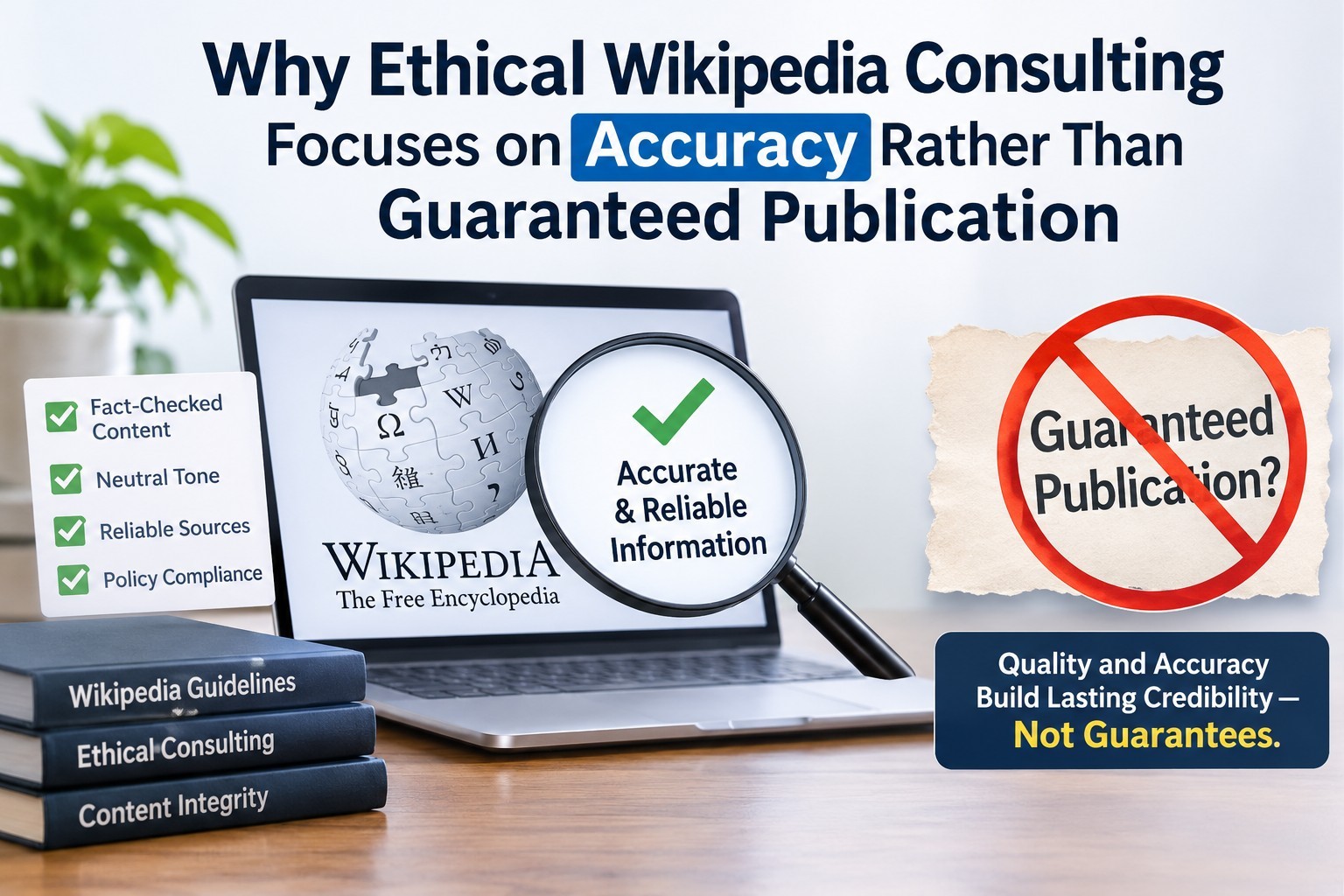
Why Ethical Wikipedia Consulting Focuses on Accuracy Rather Than Guaranteed Publication

The promise of a guaranteed Wikipedia article can soundappealing to a company seeking credibility or a professional hoping to documenta career. It is also a warning sign. Wikipedia is written and reviewed by anindependent community, and no outside consultancy can contractually controlpublication or future retention. Ethical advice begins with that limitationrather than hiding it until a draft is declined.
A responsible best wikipedia page creationservice offers research, source analysis, neutral drafting, andtransparent guidance. These services can improve the quality of a submission,but they cannot replace independent editorial judgement. The difference mattersbecause Wikipedia is not an advertising platform. Its value to readers dependson accurate information that is supported by reliable sources rather than paidassurances.
What a consultant can reasonably promise
A service provider can promise a defined research process,an assessment of published sources, professionally written draft text, andtimely communication about reviewer feedback. It can explain the relevantguidelines and document how citations were evaluated. It cannot promise that avolunteer will approve a page, preserve particular phrasing, or prevent laterdeletion discussions. Separating controllable deliverables from uncontrollableoutcomes is a basic requirement of truthful marketing.
Accuracy begins with selective inclusion
A client may supply dozens of accomplishments, but not everyclaim is suitable for an encyclopedia. Responsible drafting selects factsaccording to independent sourcing, relevance, and due weight. Unverified awarddescriptions, exaggerated commercial claims, and unnecessary private detailsshould not be included simply because the client requests them. The samediscipline applies to negative assertions. Accuracy means more than avoidingtypos. It means presenting an appropriately balanced account that the evidencecan support.
Why source independence protects credibility
Information published by the subject can be useful for basicfacts, but independent coverage is especially important when assessing the casefor a standalone article. Paid features, copied releases, and promotionalinterviews may not carry the evidentiary weight their appearance suggests.Consultants should explain these distinctions openly. A thin source base cannotbe transformed into a strong notability case through longer prose or a moreattractive infobox. Recognising that limitation is part of competent advice.
Disclosure should never be negotiable
The Wikimedia Foundation's paid contribution policy requiresdisclosure of employer, client, and affiliation, and English Wikipediadiscourages conflicted editors from direct edits to affected articles. Anondisclosure agreement with a client does not remove those obligations.Agencies should build compliant disclosure into their workflow and agreements.The purpose is not to invite unnecessary scrutiny but to make financialrelationships visible so other contributors can evaluate proposed changesappropriately.
Avoid promises about permanent control
A client buying professional services wikipedia pagecreation for companies may expect future control over the article'swording. That expectation should be corrected before work begins. Wikipediaarticles can be revised by other editors, and reliable critical coverage cannotsimply be deleted because it is inconvenient. Even a well prepared article maylater be challenged if new information changes the sourcing picture.Responsible providers should not sell ownership, immunity from editing, orguaranteed deletion of criticism as features of their service.
How to evaluate a service agreement
A clear agreement should describe the assessment, draftingscope, revision support, payment terms, and limits of the engagement. It shouldalso state what happens if the sources prove insufficient or a reviewerdeclines the submission. Clients can ask how potential conflicts of interestwill be disclosed and whether the consultant will refuse requests that violateWikipedia policies. Transparent terms make it easier to judge the quality ofwork without confusing an editorial outcome with a commercial guarantee.
Respect community decisions and discussions
Sometimes a reviewer disagrees with a consultant'sinterpretation of notability, or an editor removes text that appears importantto the subject. Constructive participation involves examining the reasoning,reviewing the sources, and discussing proposed changes calmly. Repeatedreversions, personal pressure, or undisclosed account coordination are notlegitimate substitutes for evidence. Wikipedia's collaborative nature means nosingle participant owns the final wording. Professional conduct should makedisagreements easier to resolve, not escalate them.
Trust is demonstrated through honest recommendations
An ethical service may advise a client not to proceedbecause the subject lacks substantive independent coverage. It may also proposea limited factual correction instead of an entirely new article. Suchrecommendations can be commercially inconvenient but editorially sound. Theyshow that the adviser is willing to apply standards consistently rather thansell every enquiry as a viable submission. Over time, this kind of candour ismore meaningful than an unsupported claim of guaranteed results.
Questions to ask before hiring an adviser
A prospective client can ask whether the fee covers awritten notability assessment, which source types will be excluded, and howpaid participation will be disclosed. It is also reasonable to ask who preparesthe draft, how factual claims are checked, and what happens if reviewersidentify problems. The answers should not suggest that the consultant hasprivileged approval authority or can control future edits. Clients shouldreceive enough information to judge whether the proposed process is careful andtransparent. If an adviser refuses to discuss disclosure or promises permanentcontrol over article wording, the client has reason to investigate further. Aserious consultant should welcome informed questions about standards andlimits.
Final Thoughts
Ethical Wikipedia consulting should be judged by researchquality, neutrality, disclosure, and the accuracy of its advice. Publicationdecisions belong to the community. Clients benefit most when a professionalexplains that boundary clearly and helps them pursue only work that credibleevidence can support.












Facebook Conversations