
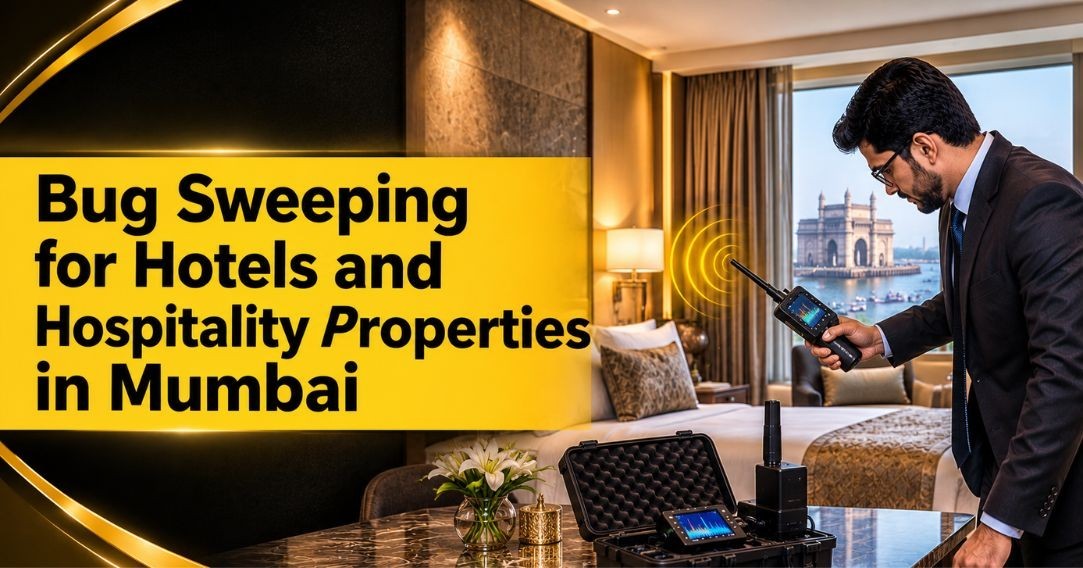
Bug Sweeping for Hotels and Hospitality Properties in Mumbai
Explore professional hotel bug sweeping in Mumbai. Learn how TSCM inspections help assess hidden cameras, listening devices and electronic surveillance risks.

Guest privacy is an important responsibility for hotels, serviced apartments, resorts, and other hospitality establishments. Every guest expects their accommodation to provide a comfortable and private environment, particularly in bedrooms, bathrooms, meeting spaces, and other sensitive areas. As electronic devices become increasingly compact and sophisticated, hospitality businesses must remain aware of potential electronic surveillance risks.
Concerns about hidden cameras, unauthorized listening devices, and suspicious electronic equipment can affect guest confidence and an establishment's reputation. While routine housekeeping and maintenance inspections are important, they may not identify every type of concealedelectronic device.
This is where professional bug sweeping services become relevant. Technical Surveillance Countermeasures (TSCM) inspections involve specialized technical procedures and equipment to assesspremises for potential electronic surveillance devices and suspiciousmonitoring activity.
For hotels and hospitality properties managing guestaccommodation and confidential business spaces, professional TSCM services cansupport a more systematic approach to privacy assessment.
Why Hotels and Hospitality Properties Need Privacy Assessments
Hotels accommodate guests from different locations, professions, and backgrounds. Their premises also contain spaces used for private conversations, business meetings, financial discussions, and personal activities.
Maintaining appropriate privacy standards is therefore an important consideration for hospitality management.
Potential electronic surveillance concerns may arise in:
- Guest rooms and hotel suites.
- Bathrooms and changing areas.
- Conference rooms and business centers.
- Executive lounges and private meeting spaces.
- Serviced apartments and extended-stay accommodation.
- Reception areas and other sensitive operational spaces.
A professional hospitality privacy assessment helpsmanagement evaluate potential electronic surveillance risks and investigates suspicious devices or installations.
It is important to understand that not every electronicdevice represents a surveillance threat. Proper technical examination helpsdistinguish legitimate equipment from suspicious findings.
Common Electronic Surveillance Concerns in HospitalityProperties
Modern hospitality properties contain numerous electronicdevices, including smart televisions, wireless routers, communication equipment, sensors, and automated control systems.
Although these technologies support daily operations, unauthorized electronic monitoring can create additional privacy concerns.
Here are some areas that may warrant attention during aprofessional TSCM inspection.
1. Hidden Camera Detection in Hotel Rooms
Guest rooms are among the most sensitive areas of the hospitality property. Guests expect privacy while using their accommodation, and any indication of unauthorized recording can create serious concerns.
Hidden cameras may be designed to resemble ordinary electronic objects or incorporated into certain equipment. A basic visual examination may not always detect concealed optical devices.
Professional hotel hidden camera detection may involve:
- Visual examination of suspicious objects and installations.
- Optical lens detection techniques.
- Assessment of unusual electronic equipment.
- RF signal analysis where applicable.
- Further technical investigation of suspicious findings.
The inspection methodology depends on the property, available access, and the nature of the concerns being investigated.
2. Listening Device Detection in Private Spaces
Unauthorized listening devices may raise concerns in areas where guests conduct personal conversations or discuss confidential matters.
Potential inspection locations may include guest rooms, private lounges, executive suites, and meeting facilities.
Professional listening device detection may involveexamining suspicious electronic equipment, assessing relevant wireless signals, and investigating unusual installations.
Since certain listening devices may use wired connections ormay not transmit continuously, relying exclusively on wireless signal detection is not sufficient for every inspection.
3. Electronic Surveillance Risks in Conference Rooms
Hotels frequently provide conference facilities forcorporate meetings, business negotiations, training sessions, and privatediscussions.
These environments may contain sensitive commercialinformation, making them relevant locations for corporate TSCM assessments.
Professional conference room bug sweeping may help evaluate:
- Suspicious electronic equipment.
- Unexpected RF transmission activity.
- Unauthorized recording devices.
- Unusual communication installations.
- Potential electronic monitoring concerns.
Periodic technical inspections can be considered as part ofa broader privacy management programme.
4. Suspicious Electronic Devices in Serviced Apartments
Serviced apartments combine residential comfort withhospitality management. Guests may occupy these properties for extendedperiods, using them for personal activities, remote work, and confidentialconversations.
A residential-style privacy assessment may involve examiningselected rooms, electronic installations, and suspicious objects for potentialmonitoring equipment.
Professional TSCM inspections can help property managementinvestigate specific concerns and evaluate relevant electronic surveillance risks.
How Professional TSCM Inspections Support HospitalityPrivacy
Technical Surveillance Countermeasures (TSCM) involves specialized procedures for identifying and evaluating potential electronics surveillance threats.
Unlike ordinary housekeeping checks, professional TSCM inspections use technical equipment and structured assessment methods.
Depending on the inspection requirements, the process mayinclude the following activities.
1. Initial Assessment and Inspection Planning
The process begins with understanding the property layout,areas requiring examination, and the nature of the privacy concerns.
Hotels may require inspections of individual guest rooms,multiple accommodation units, conference facilities, or selected operationalareas.
The inspection scope should be established before technical work begins.
2. Physical Examination of Selected Areas
A physical examination helps identify suspicious objects, unusual installations, modified equipment, and other findings that may requireadditional investigation.
Special attention may be given to electronic appliances, fixtures, furniture, and accessible communication infrastructure.
3. RF Signal Detection and Spectrum Analysis
Certain electronic surveillance devices use wirelesstransmissions to communicate or transfer information.
RF detection equipment and spectrum analyzers can specialists examine radio frequency activity and investigate unusual signalcharacteristics.
However, hotels contain legitimate wireless systems such asWi-Fi access points, Bluetooth devices, and communication equipment. Technical interpretation is essential to avoid treating normal electronic activity as evidence of surveillance.
4. Specialized Electronic Device Detection
Depending on the inspection scope, professionals may useadditional equipment such as non-linear junction detectors (NLJD), optical lensdetection instruments, and other electronic testing tools.
These technologies help examine different aspects ofpotential concealed electronic devices.
No single instrument can identify every possiblesurveillance technology, which is why multiple inspection methods may benecessary.
5. Findings and Technical Reporting
After the inspection, relevant findings should be documented and explained to the client.
Where suspicious equipment or activity is identified, further examination may be recommended to establish its nature andsignificance.
A structured report can help hospitality managementunderstand the inspection findings and determine appropriate next steps.
Which Areas of a Hotel Should Be Considered for TSCMInspection?
Every hospitality property has different layouts,facilities, and operational requirements. Inspection priorities shouldtherefore be based on the property type, risk assessment, and specificconcerns.
Hospitality area Inspection considerations
Guest rooms: Suspicious electronic devices and potential hidden cameras
Bathrooms and changing areas Privacy-sensitive fixtures and unusual installations
Executive suites: Sensitive conversations and electronic monitoring concerns
Conference rooms: Potential wireless and recording devices
Business centers: Confidential meetings and communication equipment
Serviced apartments Residential privacy and suspicious electronic installations
Private lounges Sensitive discussions and unauthorised monitoring concerns
Hospitality management should also ensure that inspectionsare coordinated with appropriate authorisation, guest privacy requirements, andoperational procedures.
Benefits of Professional Hotel Bug Sweeping Services inMumbai
Professional bug sweeping inspections can offer several practical advantages to hospitality businesses.
1. Improved Privacy Awareness
Technical assessments help management understand potentialelectronic surveillance risks within selected areas of a property.
2. Investigation of Suspicious Devices
Professional inspections can help examine unusual electronic equipment and determine whether additional investigation is necessary.
3. Support for Guest Confidence
A responsible approach to privacy concerns can contribute toguest confidence and demonstrate management's attention to sensitiveoperational matters.
4. Corporate Hospitality Assessments
Hotels hosting executive meetings, corporate events, andbusiness conferences may consider TSCM inspections for selected meetingenvironments.
5. Better Understanding of Electronic Risks
Technical inspections help property management understand how different electronic devices and communication technologies may affectprivacy assessments.
It is important to recognize that no inspection canguarantee the complete absence of every possible surveillance threat. The purpose is to conduct a systematic technical assessment using appropriatemethods and equipment.
Choosing Professional Hotel Bug Sweeping Services inMumbai
Selecting an appropriate TSCM service provider is an important consideration for hospitality businesses.
Hotels operate in environments where confidentiality,discretion, and professional conduct matter. An inspection provider shouldunderstand the requirements of hospitality properties and the importance ofconducting assessments without unnecessary disruption.
Before selecting a provider, consider these factors:
- TSCM expertise: Evaluate experience in technical surveillance inspections.
- Specialized equipment: Understand the types of RF detection, spectrum analysis, and electronic inspection instruments available.
- Inspection methodology: Ask how guest rooms, conference facilities, and other selected areas will be assessed.
- Confidentiality: Ensure sensitive inspection details and findings are handled appropriately.
- Inspection reporting: Clarify whether technical findings and observations will be documented.
- Operational coordination: Discuss scheduling and access arrangements to minimize disruption to hotel operations.
The right inspection approach should be based on theproperty's specific requirements rather than a standardised checklist alone.
Professional TSCM Services in Mumbai by Trace Point India
Hotels, serviced apartments, and hospitality propertiesrequire a responsible approach to evaluating potential electronic surveillanceconcerns.
Trace Point India provides specialised TSCM debugging andbug sweeping services in Mumbai, helping organisations and individualsassess sensitive environments through technical inspection procedures.
Depending on the inspection requirements, the assessment mayinvolve specialised RF detection equipment, spectrum analysis, electronicdevice examination, and other appropriate TSCM methodologies.
Services may be relevant for:
- Hotels and guest accommodation properties.
- Serviced apartments and private residences.
- Conference rooms and corporate meeting facilities.
- Executive suites and business lounges.
- Other sensitive commercial and private environments.
The objective is to assess potential electronic surveillancerisks through suitable technical procedures and help clients understandrelevant inspection findings.
Frequently Asked Questions (FAQs)
1. What are hotel bug-sweeping services?
Hotel bug sweeping services involve professional technicalinspections of selected hospitality areas to assess potential hidden cameras, listening devices, and other suspicious electronic monitoring equipment.
2. Why should hotels consider professional TSCMinspections?
Hotels manage guest accommodation, private spaces, andcorporate meeting facilities. Professional TSCM inspections can help management assess potential electronic surveillance risks and investigate specific privacyconcerns.
3. Can professional bug sweeping detect hidden cameras inhotel rooms?
Professional inspections may use visual examination, optical lens detection equipment, RF analysis, and other suitable techniques toinvestigate potential hidden cameras. The effectiveness of each method depends on the device technology and inspection conditions.
4. What equipment is used for hotel hidden cameradetection?
Depending on the inspection requirements, equipment mayinclude optical lens detectors, RF detectors, spectrum analyzers, non-linear junction detectors, and other specialized electronic testing instruments.
5. How often should hotels arrange TSCM inspections?
There is no universal inspection frequency for everyhospitality property. Management may consider periodic assessments based onproperty-specific risks, operational requirements, previous concerns, and the sensitivity of the areas involved.
6. Can conference rooms and business centers undergo bug-sweeping inspections?
Yes. Conference rooms, executive meeting spaces, andbusiness centres can be included in professional TSCM inspections to assesspotential electronic surveillance concerns.
7. Where can hotels find professional bug sweepingservices in Mumbai?
Hotels and hospitality businesses can contact Trace PointIndia at +91 9999335950 to discuss professional TSCM debugging and bug sweepingrequirements in Mumbai.
Conclusion
Guest privacy and responsible management of sensitive spaces are important considerations for modern hospitality businesses. From guestrooms and serviced apartments to conference facilities and executive suites, different areas may require appropriate technical privacy assessments.
Professional hotel bug sweeping services in Mumbai combine specialised equipment, technical expertise, and systematic inspectionprocedures to evaluate potential hidden cameras, listening devices, and otherelectronic surveillance risks.











Facebook Conversations